Phase 1: Post-Op
Restoration

Return to sport safely with clear benchmarks, expert guidance, and elite performance testing. We don't just heal your knee. We rebuild your athletic capacity.

Pre-Op

Pre-Surgery

Post-Op

After Surgery

Phase 1

Weeks 0–4

Phase 2

Weeks 5–12+

Phase 3

Weeks 20-36

Phase 1 Milestones

A structured, milestone-based approach to ensure you earn the right to progress at every stage of your recovery.
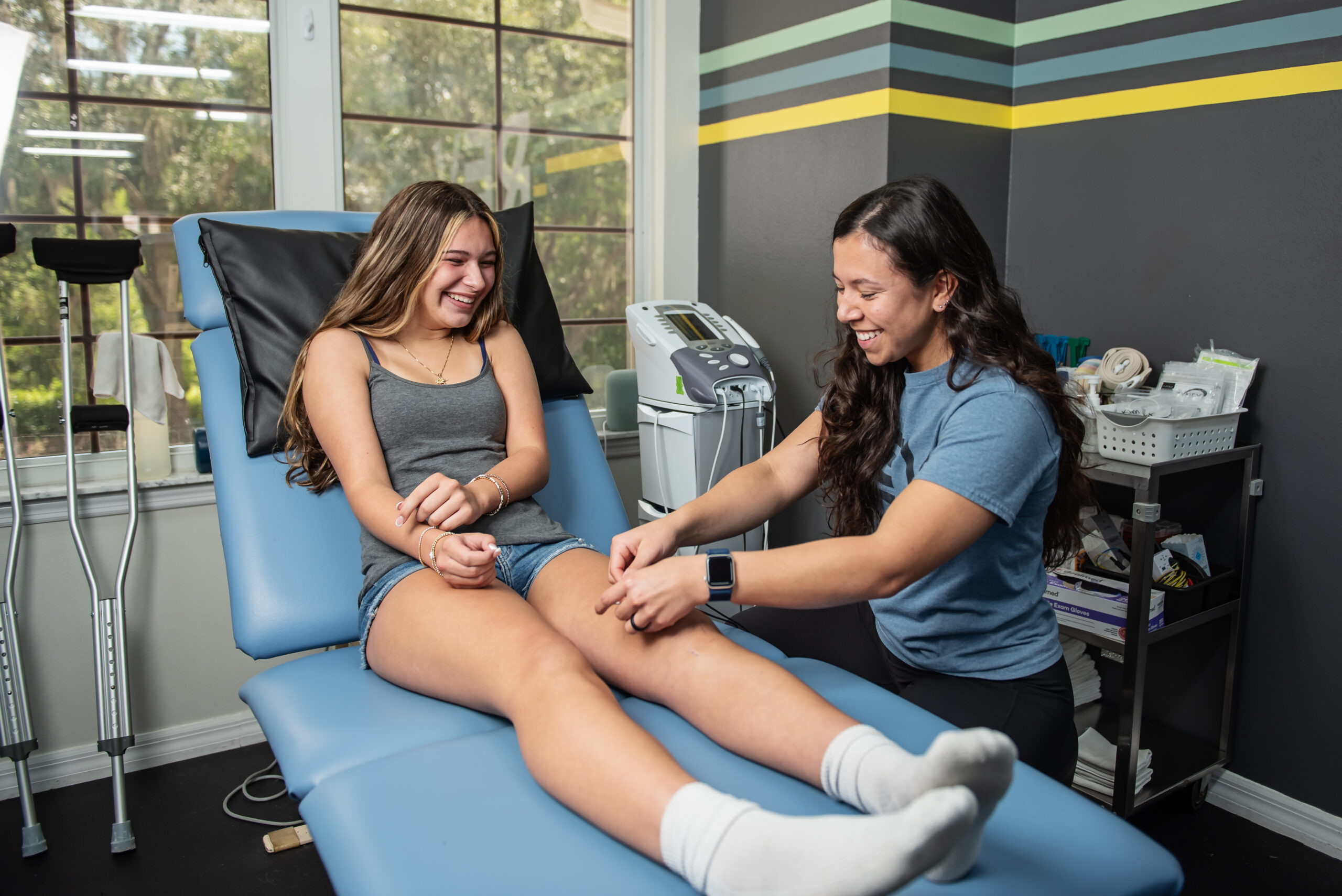
A Quiet Knee

Build the Foundation Early

Reduce surgical stress and restore basic function so your knee can handle load again.
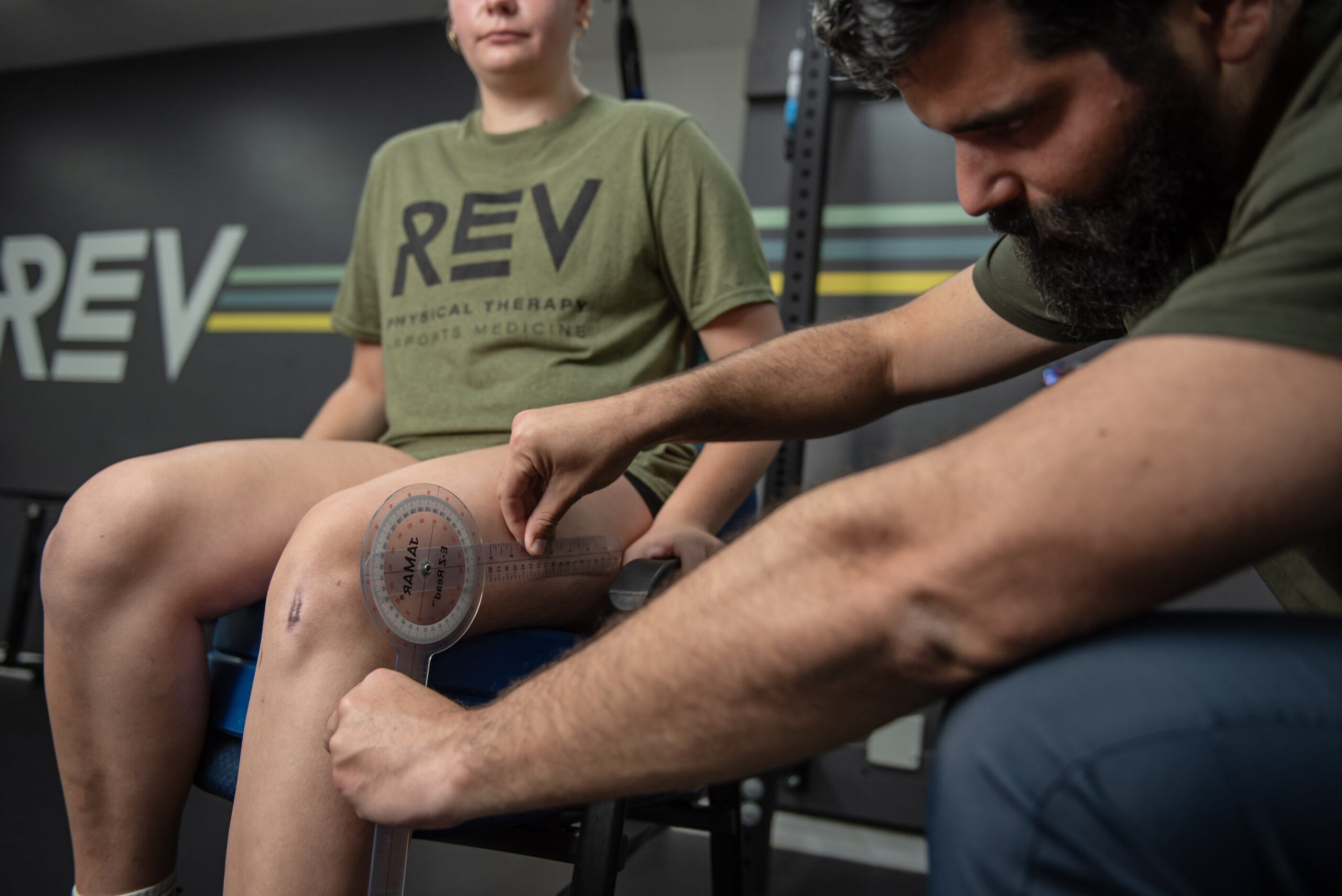
Primary Goals
  • Reduce swelling and inflammation
  • Restore full knee extension and flexion
  • Activate the quadriceps
  • Normalize walking mechanics
Interventions
  • Progressive weight-bearing
  • NMES & BFR for early strength

Full Knee Extension

Earn the Right to Progress

Develop enough strength and control to safely reintroduce running and higher impact.

Focus Areas
  • Quadriceps strength development
  • Single-leg control and endurance
  • Deceleration and movement control
Running Criteria

Introduced only when strength benchmarks are met, not just based on time. Structured loading progression.
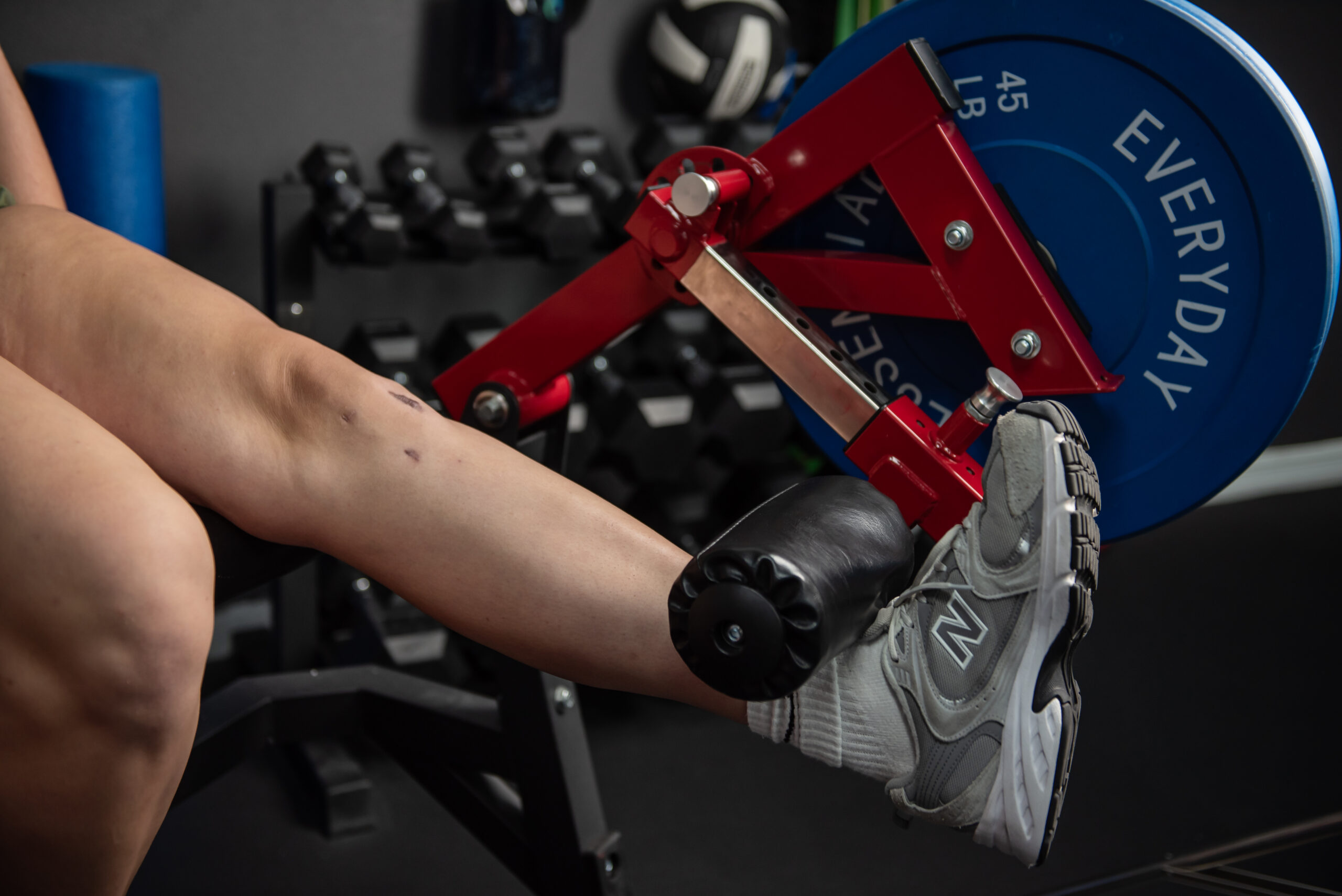
Quadriceps Reactivation

From Strength to Performance

Prepare for the chaotic demands of sport through higher-level strength, power, and agility work.

Key Benchmarks
  • Quad strength ≥ 90% symmetry
  • Hamstring-to-quad strength balance
  • Advanced strength and control testing
Performance Focus
  • Power production & Force absorption
  • Change of direction
  • Sport-specific movement
The Phase 1 program in detail

Goals, Interventions & Modalities

This initial phase, often termed the “restoration” or “protection” phase, focuses on resolving surgical trauma and establishing a foundation for advanced strengthening.

Primary goals

  • Resolve post-surgical trauma. Decrease swelling to normalize quadriceps recruitment, which is a prerequisite for walking without crutches.
  • Restore range of motion. Prioritize regaining full active and passive knee extension immediately, and restoring knee flexion.
  • Achieve a “quiet knee.” Aim for trace to zero effusion and the elimination of a quadriceps lag during a straight leg raise.
  • Quadriceps activation. Targeted exercises and modalities to reverse muscle inhibition caused by surgery.

Interventions and exercises

Immediate motion. We begin active knee motion exercises immediately after surgery, unless otherwise instructed by the surgeon. Early mobilization improves ROM without compromising graft stability.

Progressive weight-bearing. We initiate progressive, controlled weight-bearing during the first week as tolerated. Rushing this process before meeting crutch discharge criteria can increase strain on the ACL.

Quadriceps strengthening:
  • Isometrics. Static quadriceps contractions and straight leg raises within the first two weeks.
  • Open Kinetic Chain (OKC). Long arc quads (90°–0°) immediately post-operation. Safe, do not loosen the graft, and essential for isolating the quadriceps.
  • Early resistance (Week 3). Progressive eccentric training using a cycle ergometer (20°–60°).

Physical therapy modalities

  • Neuromuscular Electrical Stimulation (NMES). Highly recommended in the very early phase to stimulate muscle activation and minimize disuse atrophy.
  • Cryotherapy. Used frequently in the first few days to reduce pain and the need for medication.
  • Blood Flow Restriction (BFR). Low-load BFR training to improve strength when high pain levels prevent heavy joint loads.
How we know you are ready for Phase 2

Monitoring, Milestones & Next Steps

Monitoring and progression

  • Effusion control. We monitor swelling using the “sweep test.” Patients should not progress if effusion is greater than 1+.
  • Soreness rules. If soreness occurs during warm-up and continues, or develops during a session, we take two days off and decrease the activity level.

Milestones to progress to Phase 2

The specific criteria required to move beyond crutches and into Phase 2:

  • Normalized quadriceps recruitment. The prerequisite for getting off crutches. Isolating and generating appropriate quadriceps load is critical for this restoration.
  • Resolution of post-surgical swelling (effusion). Required because it allows the normalization of quadriceps recruitment.
  • Elimination of a quadriceps lag. The ability to perform a straight leg raise without a quadriceps lag (often associated with a “quiet knee”).
  • Full knee extension. Necessary for achieving a normalized gait pattern.
  • Pain-free weight-bearing. Walking initiated in a progressive, controlled manner as tolerated.

Rushing the weaning process before these criteria are met often leads to increased strain on the ACL.

When can I stop using the brace?

Brace discontinuation is a clinical decision based on your quadriceps control, knee stability, and your surgeon’s post-op protocol, not a calendar date. Most patients begin weaning the brace once they demonstrate normalized quadriceps recruitment, full knee extension, and pain-free weight-bearing without it. We coordinate brace progression with your surgeon’s guidance throughout Phase 1. (Generic answer drafted by REV; team to confirm before publishing.)

Disclaimer

Timeframes vary depending on meniscus or additional structure involvement, tissue healing, and individual response. They are not specific to any one patient.

Where Phase 1 Sits in Your Recovery

From pre-surgery prep to full return to sport, each phase has a purpose. Our process is built around clear benchmarks, advanced testing, and a plan that adapts to you.

ACL Rehab FAQs

Clear Answers at Every Stage

Return to run is based on both time since surgical intervention as well as quantitative testing. These tests include: 

  • Quad LSI (Limb Symmetry Index) of 70% to the contralateral side. Return to Run is not indicated before week 12 to allow for proper healing timelines for the surgical graft.
  • Single-leg step-downs: Able to perform from an 8-inch box to failure with approximately 70% of the strength and endurance of the non surgical leg.
  • Single-leg glute bridge: Can complete from a 20-inch surface to failure with approximately 70% of the strength and endurance of the non surgical leg.
  • Single-leg calf raises: Able to perform with the front foot elevated at about 70% of the other leg.
  • Single-leg wall sit: Can hold for 30 seconds, with both sides compared for endurance.

Deceleration training: Successfully performing drills that focus on slowing down, maintaining control through the knee without compensation or pain.

Like return to run, return to sport is based both on quantitative testing, as well as time since surgery. Generally, return to sport does not occur before 6 months post-operatively. These tests include:

  • Quad LSI of 80% or greater
  • Hamstring LSI to 60%
  • Looking for a 2:3 ratio between hamstrings:quads
  • Ability to perform anterior tap down from 12” box with complete control at least 15 reps while holding ⅓ of your body weight 
  • Rear Foot Elevated Split Squat (RFESS) Test (thigh parallel to floor): 50% BW for 10 reps
  • Lateral Box squat test (thigh parallel to floor): 33% BW x 10 reps
  • Bodyweight Squat MINIMUM 60%
  • Triple Hop Test
  • Agility / Force plate testing (if you’d like more information on this, click *here*)

Crutches are generally discharged when you are able to perform terminal knee extension independently and without quad lag. This is defined as the inability to perform a “heel pop” when performing quad activation in a long-sitting position, or when you are unable to keep your knee straight as you start to lift your leg from the table.. This should also be achieved in a standing position comfortably and without evidence of inability to maintain this position.

The decision is always yours! Generally, younger, active individuals involved in a sport setting are recommended to undergo surgical intervention. There are some research articles to indicate non-surgical healing or positive non-surgical outcomes in certain populations.

We will start by unlocking the brace once you have enough quad strength and control to walk safely. Your knee should be able to support your body without giving out.

After that, you’ll still use crutches for support as your walking continues to improve. When you can walk smoothly and confidently without pain or instability, we will gradually wean you off the crutches.

Criteria:

  • Adequate quadriceps control and strength for walking 
  • Ability to walk without pain or swelling
  • No signs of the knee buckling or giving out
  • Ability to perform active terminal knee extension and a straight leg raise

Your first visit focuses on understanding your goals and creating a plan. We will:

  • Review your surgery and medical history
  • Provide a full evaluation of your knee after surgery  
  • Set clear rehab goals and expectations 
  • Go over home exercises needed to be successful in early phases of rehab 
  • You will leave with a personalized program and a clear idea of your recovery timeline.

Clicking and popping is normal following surgery especially as we start initiating movement. If you are concerned about it, ask your rehab specialist or you surgeon.

  1. Swelling is normal early post operation. As we progress it can be normal following increases in activity or when we introduce new exercises. 
  2. It can be a problem if there is sustained selling that does not improve with elevation and rest.
  • Recovery from ACL surgery is a marathon not a sprint. 
  • Rehab is a process and rushing it leads to less optimal outcomes. 
  • Typical rehab should last from 6 months to a year or more  based on your goals and how you progress

Ready for Phase 1?

Don't leave your recovery to chance. Get a data-driven plan designed for elite performance.